Sustainable Lighting Design: How to Reduce Energy Use Without Compromising Aesthetics
Sustainability is no longer a separate agenda item on a project brief. For most architects, interior designers and developers working today, it is part of the brief itself. The question is no longer whether a lighting scheme should be energy efficient. It is how to make it efficient without losing the visual quality and design intent that the project demands.
The good news is that the two are not in conflict. With the right products, the right controls and the right approach at the specification stage, a lighting scheme can meet ambitious sustainability targets and still look exactly the way it should.
Why Lighting Matters So Much in a Sustainability Brief
Lighting accounts for a significant share of energy consumption in most building types. In commercial environments, it can represent between 20 and 40 percent of total electricity use. In retail and hospitality spaces, that figure can be even higher.
This makes lighting design one of the highest-impact areas in any energy reduction strategy. It is also one of the areas where the right decisions deliver the fastest return, both in terms of energy savings and reduced maintenance costs over the life of the installation.
Getting it right requires more than simply switching to a lower-wattage product. It requires thinking about the whole system, from the light source to the control architecture to the way the space is actually used.
Start With the Right Light Source
The foundation of any energy-efficient lighting scheme is the light source itself. LED lighting is now the standard specification choice across every sector, and for good reason. Compared to older technologies, LED sources use significantly less energy to produce the same light output, run cooler and last considerably longer.
But not all LED products perform equally. A well-specified LED source will maintain its output consistently over thousands of hours. A poorly specified one will depreciate quickly, produce inconsistent colour rendering and require earlier replacement, which adds cost and waste that offsets the energy saving.
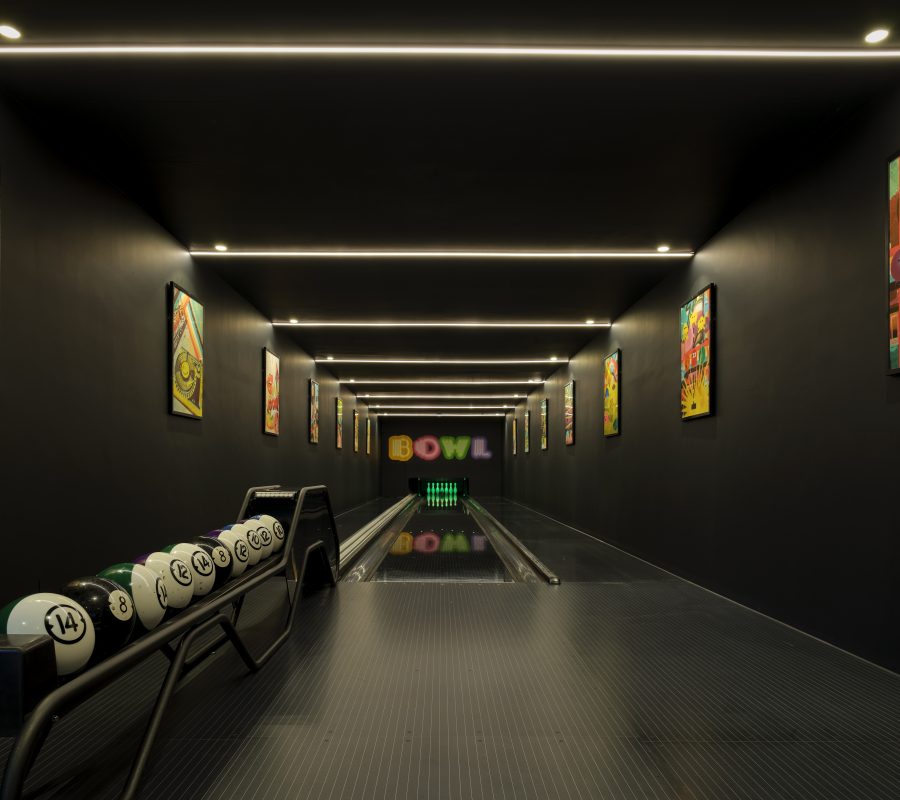
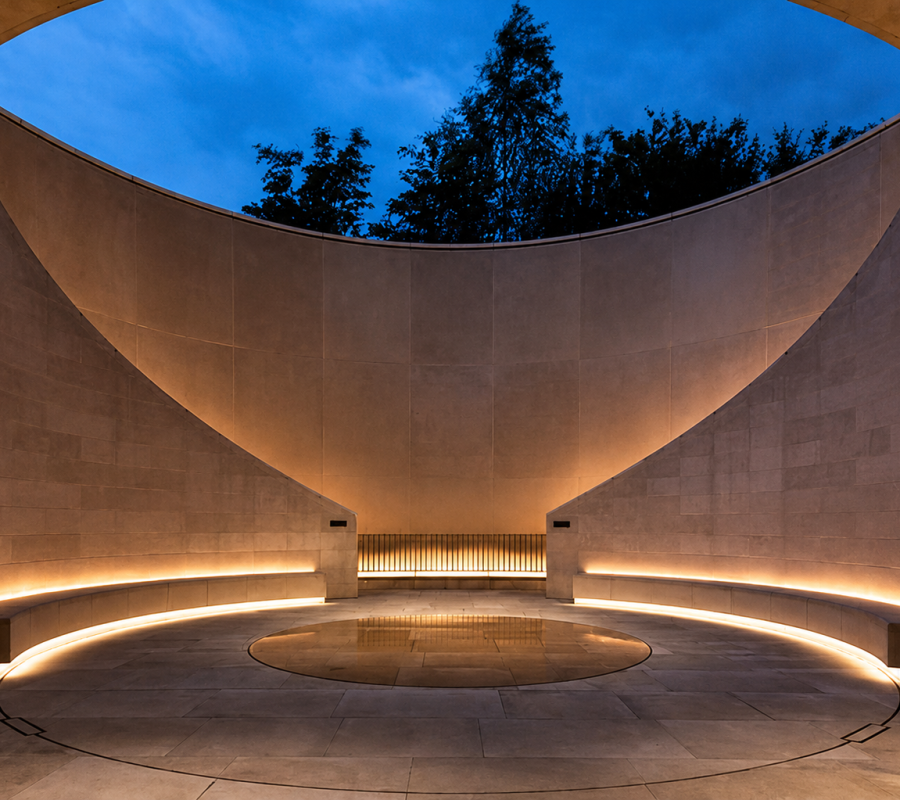
Linear lighting systems and LED strip lighting are particularly well suited to sustainable specifications because they deliver high lumen output per watt, integrate cleanly into architectural surfaces and reduce the number of individual fittings required across a scheme.
Use Light More Precisely
One of the most effective ways to reduce energy use in a lighting scheme is to deliver light only where it is needed, at the level it is actually required.
This sounds straightforward, but it requires careful attention to lux levels at the design stage. Over-lighting a space wastes energy directly. It also creates glare, which reduces comfort and can require additional corrective measures. Under-lighting creates the appearance of poor quality, which often leads to more fittings being added later.
A properly calculated lighting design uses photometric data to model how light will behave in a space before anything is installed. This removes guesswork from the specification and ensures that the energy being used is producing exactly the result the design requires, nothing more and nothing less.
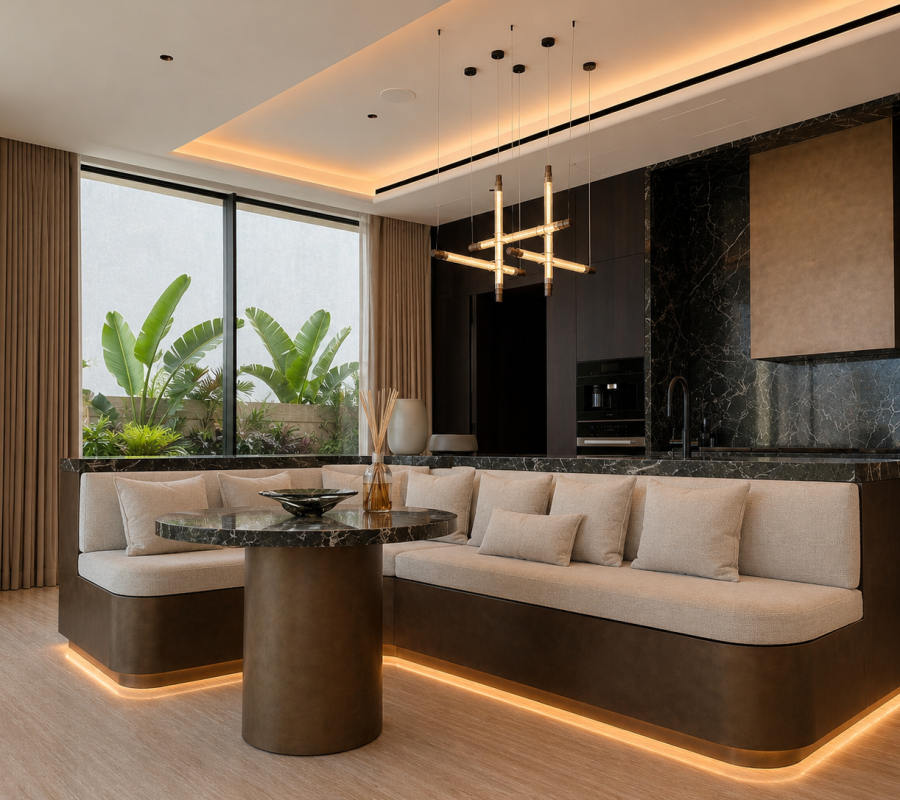
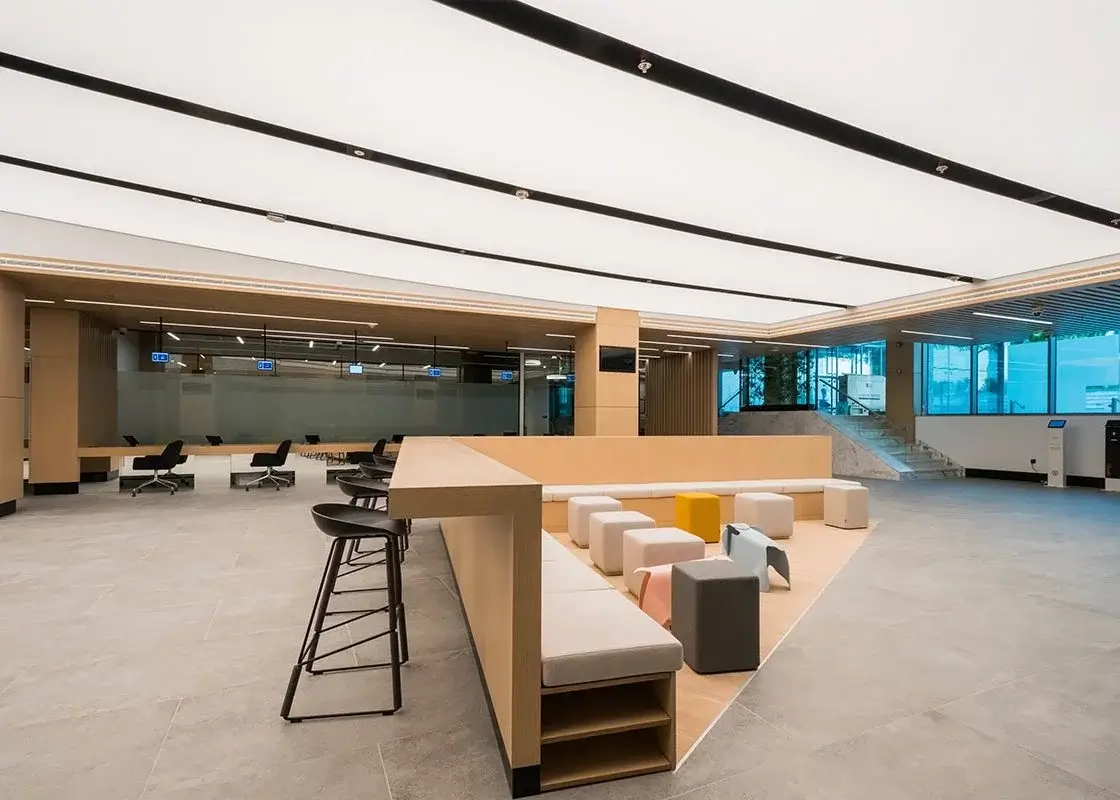
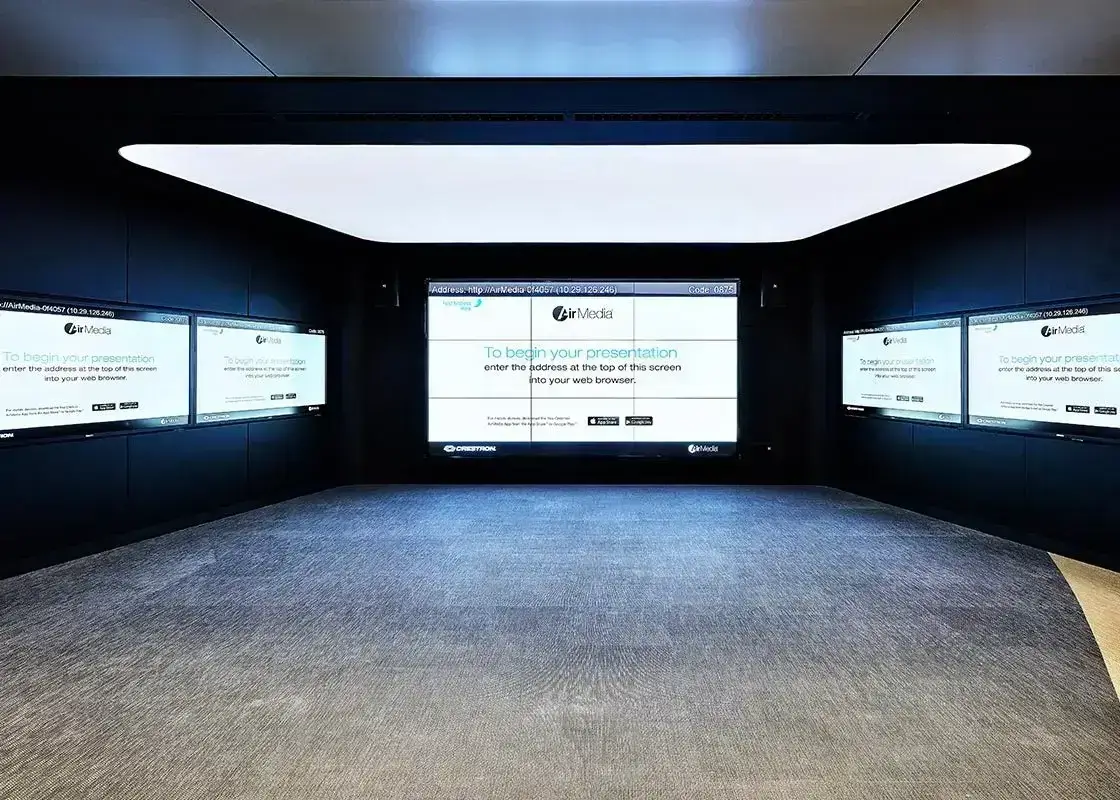
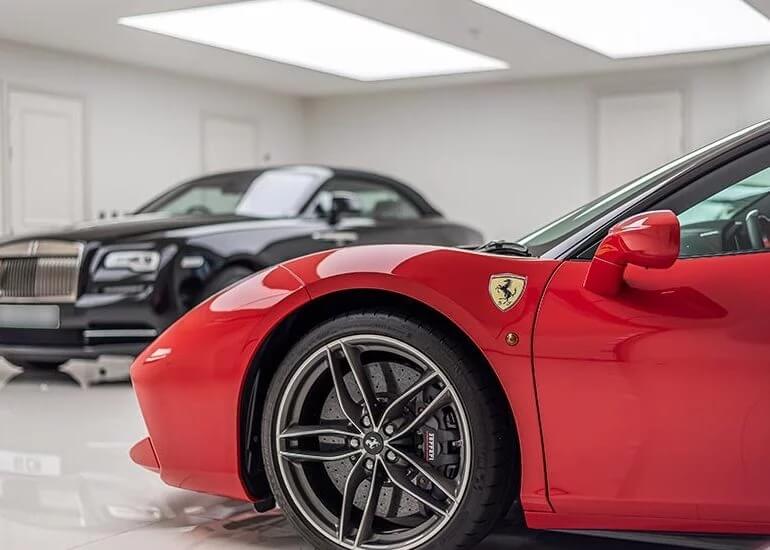
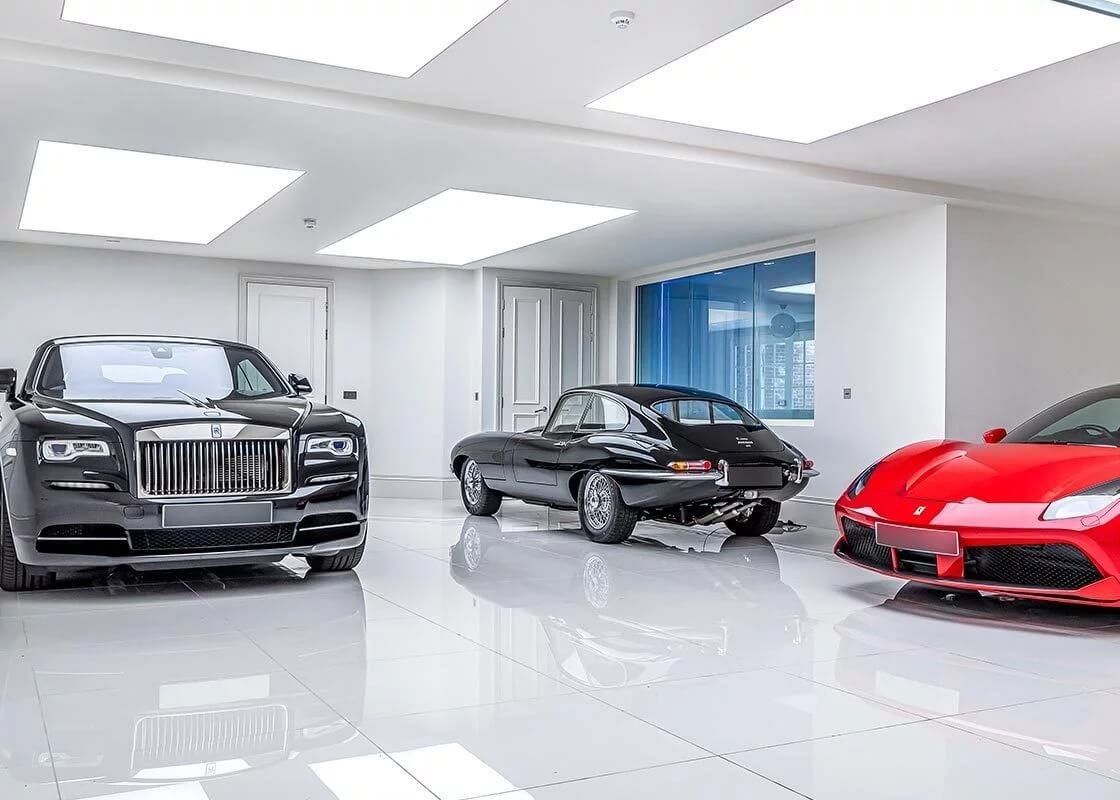
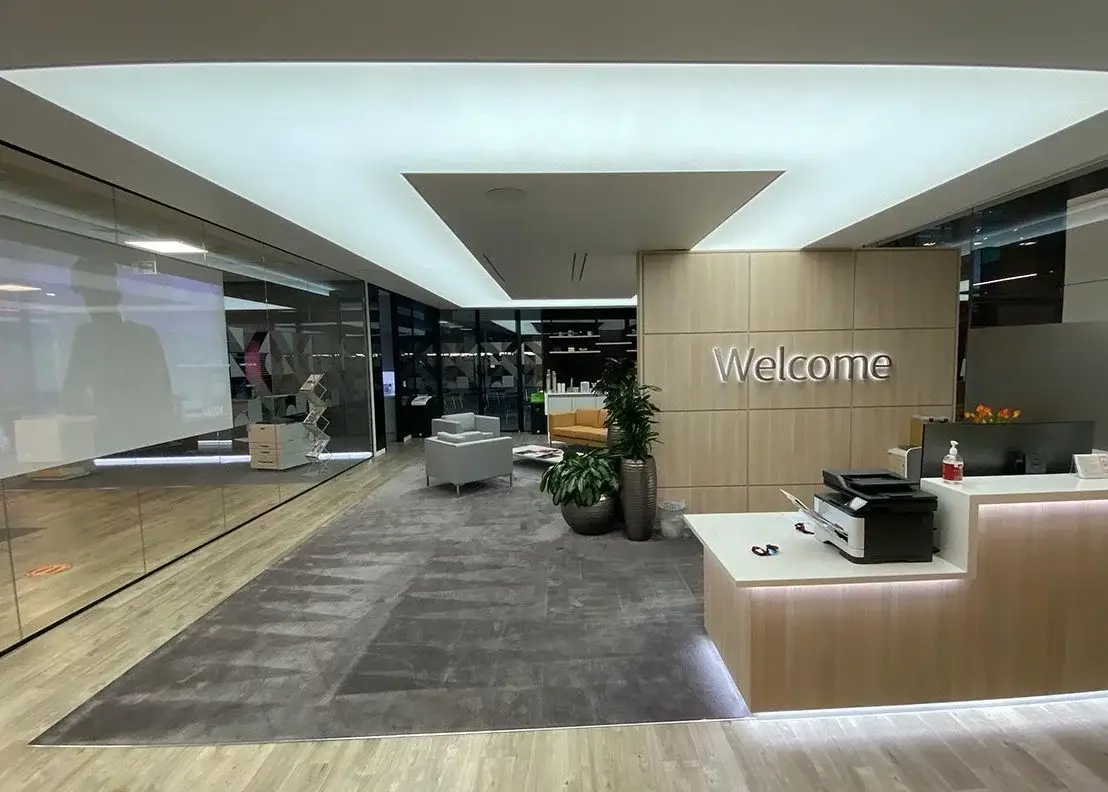
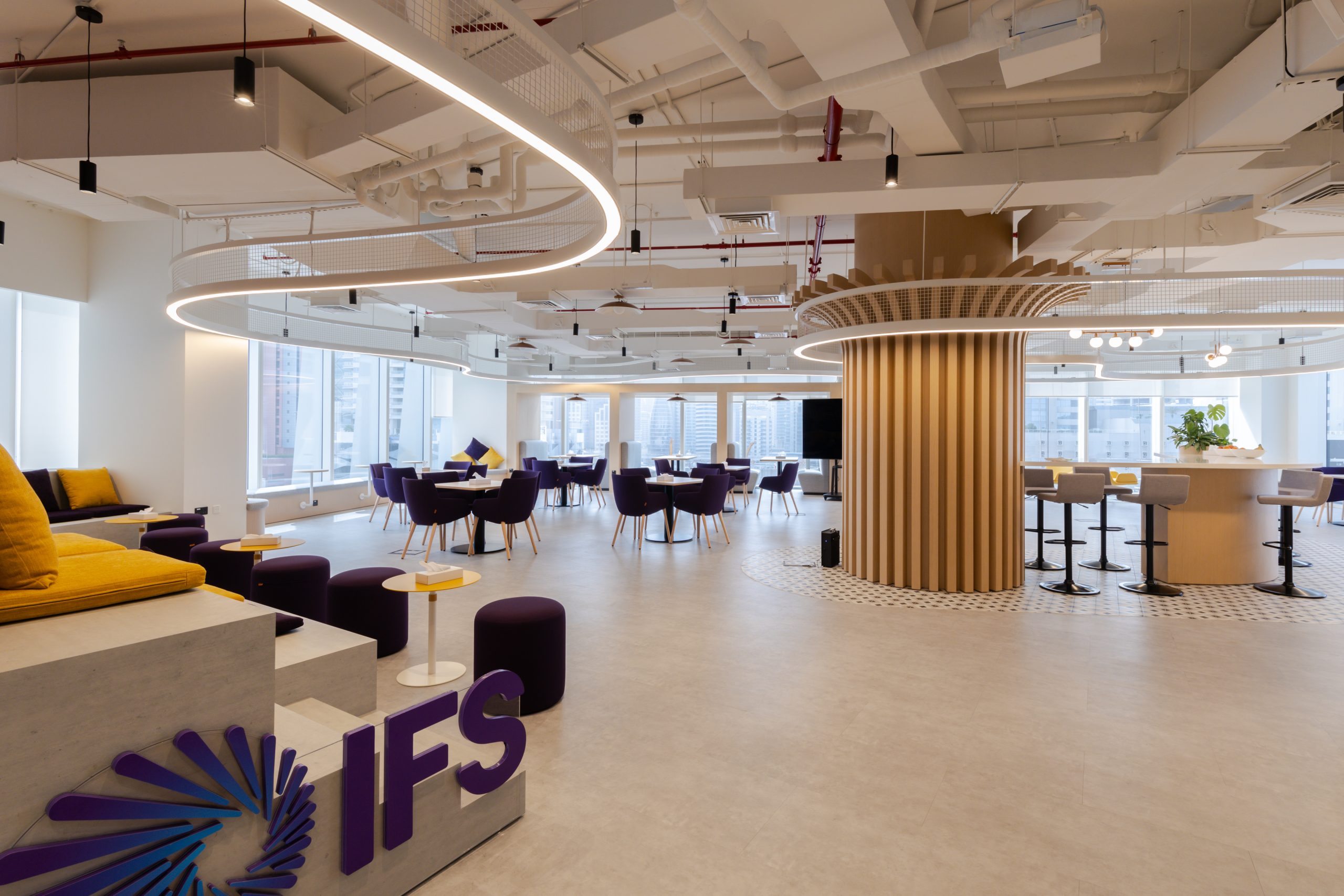
Illuminated ceilings are a good example of precision in practice. Rather than distributing light from multiple point sources, an illuminated ceiling diffuses light evenly across the entire plane of the ceiling, reducing the total number of fittings needed while delivering consistent, high-quality light across the space below.
Smart Controls Are Not Optional
Energy-efficient light sources are only part of the equation. A well-specified LED fitting that runs at full output for sixteen hours a day in an unoccupied space is not a sustainable solution.
Smart lighting control systems are what translate a good specification into a genuinely low-energy installation. The technologies available now are practical, reliable and increasingly affordable across a wide range of project types.
Occupancy sensors reduce energy use in spaces that are not always in use. Meeting rooms, corridors, storage areas and back-of-house spaces in hospitality environments are all candidates for occupancy-based control. Light is available when the space is occupied and reduces or switches off when it is not.
Daylight harvesting uses sensors to monitor natural light levels entering a space and adjusts artificial light output accordingly. On a bright day, fittings near windows dim automatically. As natural light fades, artificial output increases to maintain the specified lux level. The space looks the same throughout the day. The energy consumption does not.
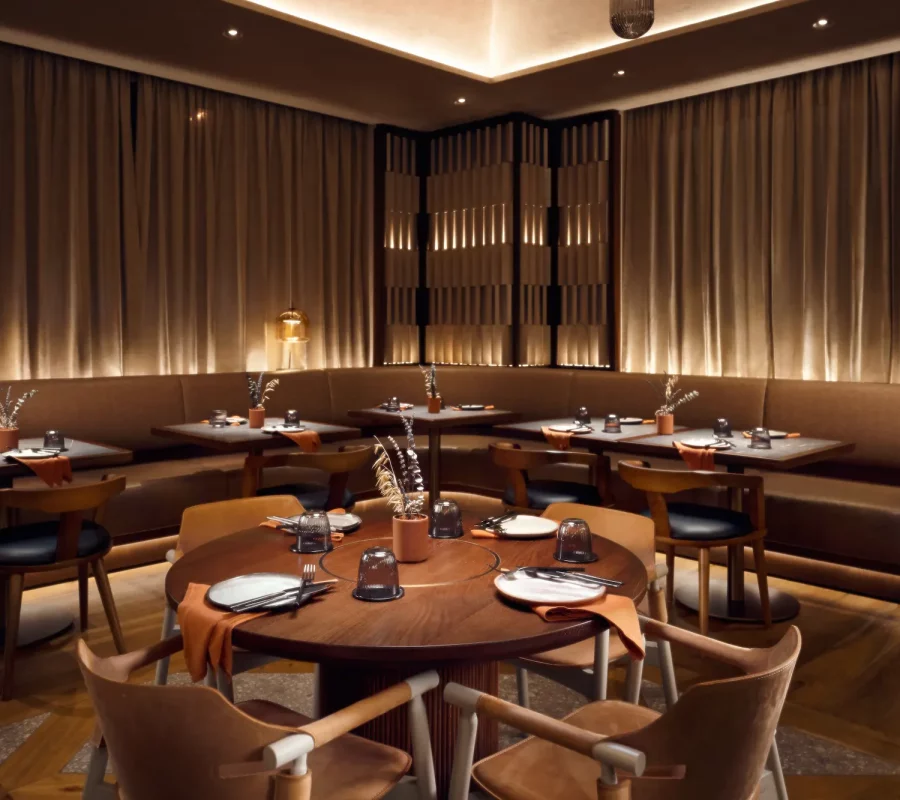
Scene control and scheduling allows different lighting levels to be programmed for different times of day or different uses of a space. A hospitality environment that runs a breakfast service, a lunch service and a dinner service does not need the same lighting output for all three. Scheduling reduces energy use across the day while improving the quality of the experience in each service period.
DALI-2 protocol is the current industry standard for intelligent lighting control and offers the highest level of flexibility and interoperability between products from different manufacturers. For any project with sustainability certification targets, DALI-2 integration is worth specifying from the outset.
Meet Sustainability Certifications Without Compromising Design
Many projects now carry sustainability certification requirements. BREEAM, LEED and WELL all include specific criteria relating to lighting, and meeting those criteria needs to be built into the specification process, not added at the end.
The most common concern from designers and clients is that meeting these standards will require compromises on the visual quality of the scheme. In practice, the opposite tends to be true.
WELL lighting criteria, for example, focus on colour rendering, flicker, glare control and circadian support. These are the same qualities that define a high-specification lighting scheme regardless of any sustainability agenda. A scheme designed to meet WELL standards will typically use high CRI sources, well-controlled lux levels and tunable white technology that shifts colour temperature across the day to support the natural rhythms of the people in the space.
Acoustic lighting products address both the acoustic performance and the lighting quality of a space within a single fitting. In open-plan commercial environments where both are specification requirements, this reduces the number of separate products needed, which has a direct impact on both the embodied carbon of the installation and the complexity of the ceiling design.
Circular Design Thinking in Lighting Specification
Sustainability in lighting is not only about energy consumption during use. It also includes the embodied impact of the products specified and what happens to them at the end of their useful life.
Circular design thinking in lighting specification means asking different questions at the brief stage:
- Can components be replaced individually rather than requiring the whole fitting to be replaced?
- Are drivers and LED modules separately serviceable, so that a driver failure does not mean discarding the entire fitting?
- Are the materials used in the product recyclable at end of life?
- Does the manufacturer provide clear information about the carbon footprint of the product?
Custom lighting solutions and decorative light fixtures designed and manufactured with longevity in mind have a lower lifecycle impact than lower-quality alternatives that require more frequent replacement. The initial cost may be higher, but the total environmental and financial cost over ten or fifteen years is significantly lower.
Sustainability and Aesthetics Are the Same Conversation
The assumption that sustainable lighting design requires aesthetic compromise is one worth setting aside early in any project.
The technologies and approaches that reduce energy use, precision specification, intelligent controls, high-quality sources, careful lux calculation, tend to produce better-looking spaces as well as more efficient ones. A scheme that delivers exactly the right light in exactly the right place, that responds to how the space is actually used and that maintains its quality over many years, is both a sustainable scheme and a well-designed one.
In residential, commercial and hospitality projects, the lighting decisions that support long-term energy efficiency are almost always the same decisions that support long-term design quality. The two objectives reinforce each other when the specification is approached correctly.
At No Grey Area, we work with architects, interior designers, developers and direct clients to develop lighting specifications that meet sustainability briefs without sacrificing the design vision.
If you are at the specification stage and want to make sure your lighting choices support both your sustainability and design objectives, get in touch with our team to start the conversation.